Managing Peritoneal Dialysis: Overcoming Obstacles and Staying Hydrated
7/13/20261 min read

Understanding Peritoneal Dialysis
Peritoneal dialysis is a method of removing waste products and excess fluid from the body when the kidneys can no longer perform these functions effectively. This treatment can be performed at home, making it a convenient option for many patients. However, it is vital to monitor your hydration levels and manage any interruptions to ensure the therapy's effectiveness.
Navigating Treatment Challenges
As experienced on July 12, 2026, there can be various interruptions during peritoneal dialysis. For instance, it is common to pause the treatment for meals or address complications such as flow obstruction. These interruptions, although manageable, may affect the overall dialysis process. It is crucial to develop a routine that minimizes disruptions while allowing for essential daily activities.
Importance of Hydration
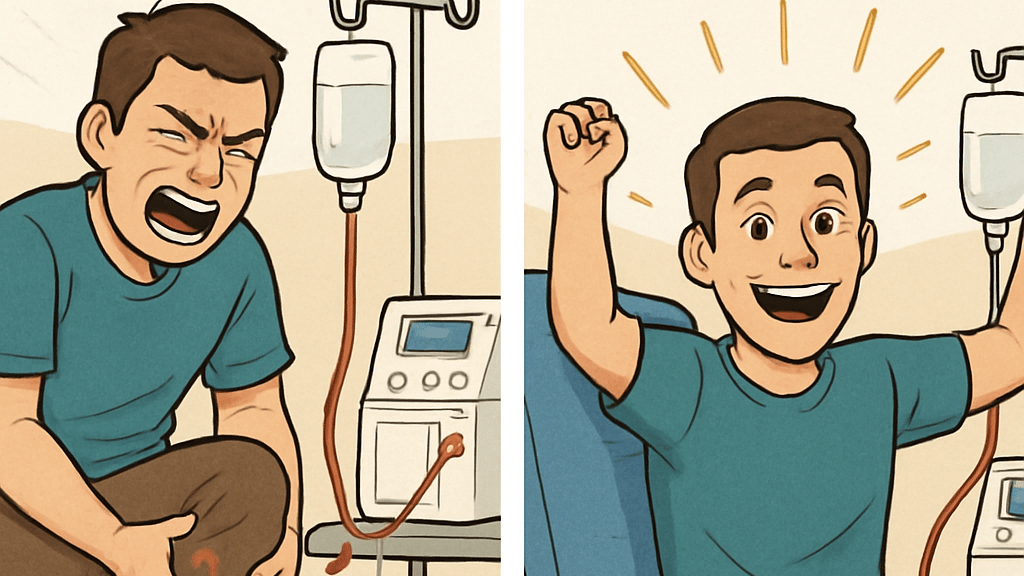
Hydration plays a significant role in the success of peritoneal dialysis. As noted during recent treatment, experiencing leg cramps can signal that your body may be lacking sufficient fluids. Ensuring adequate hydration is not just about drinking water; it involves monitoring fluid intake throughout the day and understanding your individual needs based on activity levels and dietary choices.
To effectively manage hydration, it's recommended to keep a log of your fluid intake and adjust according to any symptoms experienced during dialysis. This proactive approach can help mitigate issues such as cramps and promote a more comfortable treatment experience. By maintaining an awareness of hydration and addressing any interruptions thoughtfully, individuals undergoing peritoneal dialysis can improve their quality of life and treatment outcomes.